
Punk Pussy
On an unconventional political stage, Punk Pussy invites readers to head bang with the united front.
PERSONAL PROJECT
Skills
Art Direction
Editorial Design
Social Media Design
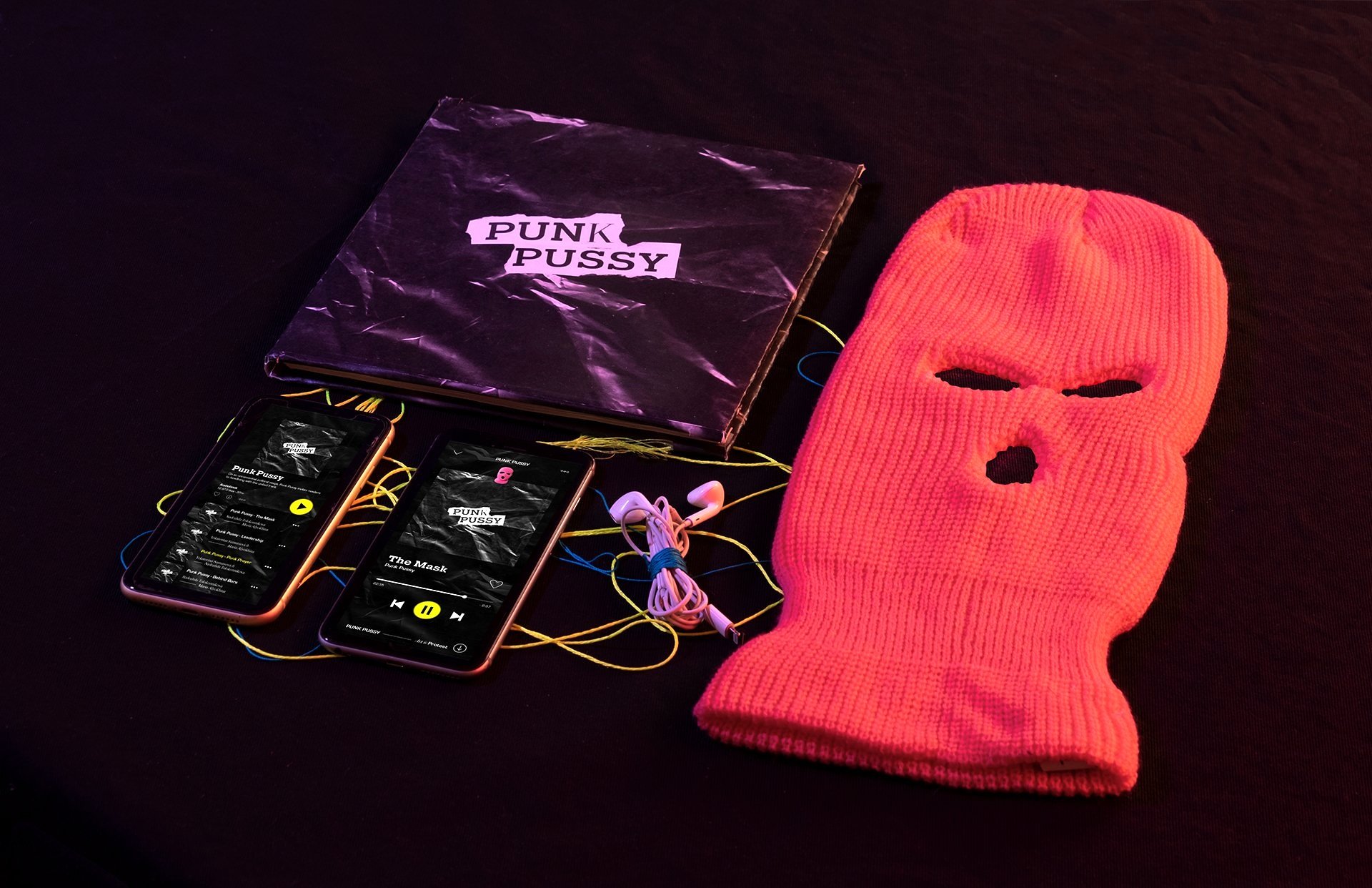
Background
In November 2011, Pussy Riot—a Russian feminist protest collective—unloaded their guitars, struck on their signature balaclavas, and began staging guerrilla demonstrations around Moscow. Through punk rock songs and demonstrations, Pussy Riot members used the forum of public protest to discuss LGBTQ+ rights, explore feminism, challenge Vladimir Putin’s policies, and expose Putin’s links to the Russian Orthodox Church.
On February 21, 2012, the group gained notable notoriety when five members staged a performance inside Moscow’s Cathedral of Christ the Savior, taking hold of the altar and directing a protest at the Orthodox Church leader’s support for Putin during his “election” campaign. These actions were stopped by church security officials and condemned as sacrilegious by the Orthodox clergy. In response, Russian authorities arrested band members Nadezhda Tolokonnikova, Maria Alyokhina, and Yekaterina Samutsevich, charging them with “hooliganism.” Striking a chord with Western audiences, the trial attracted considerable media attention and opened global dialogue for critique of Putin’s regime.

Design Strategy
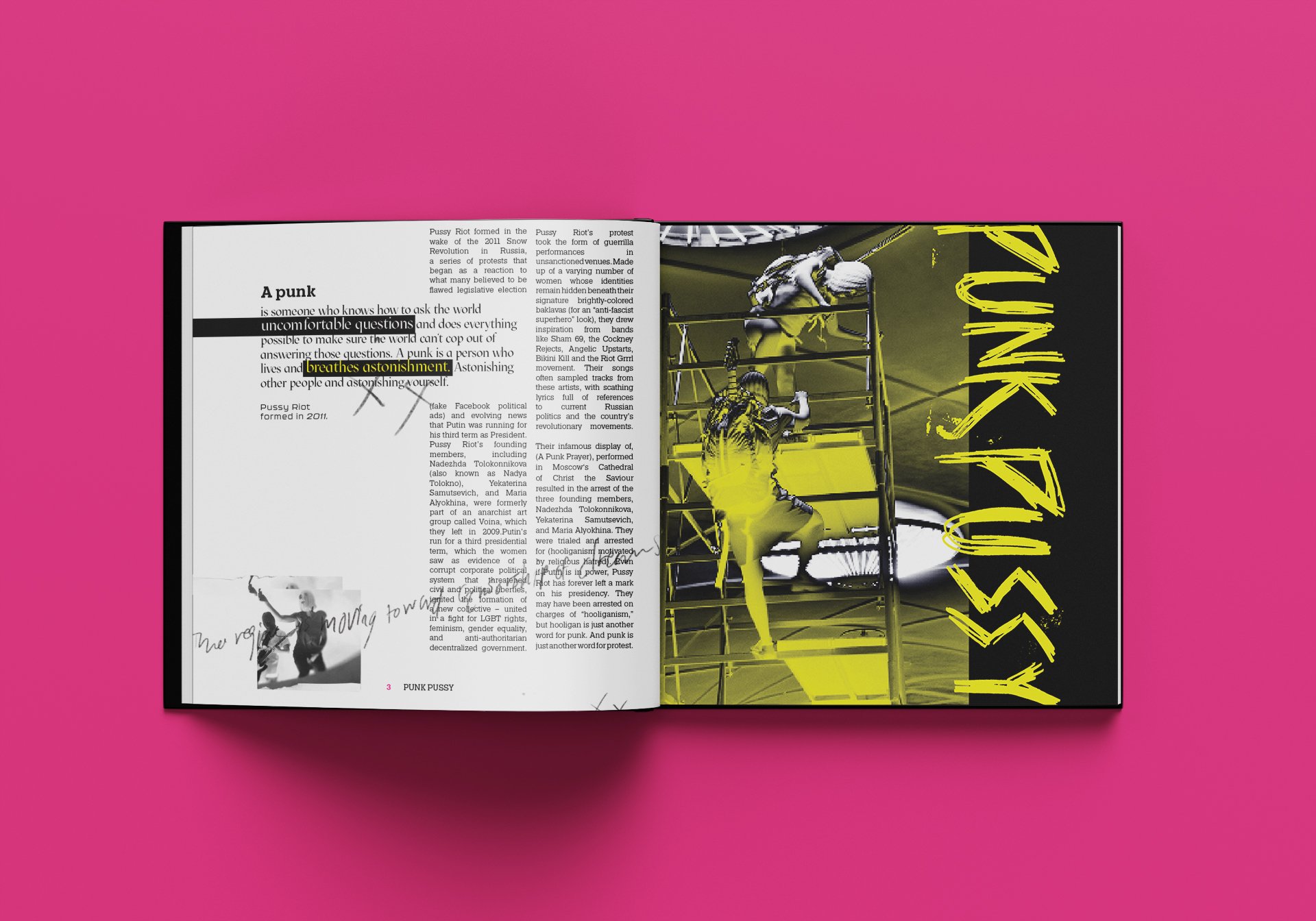
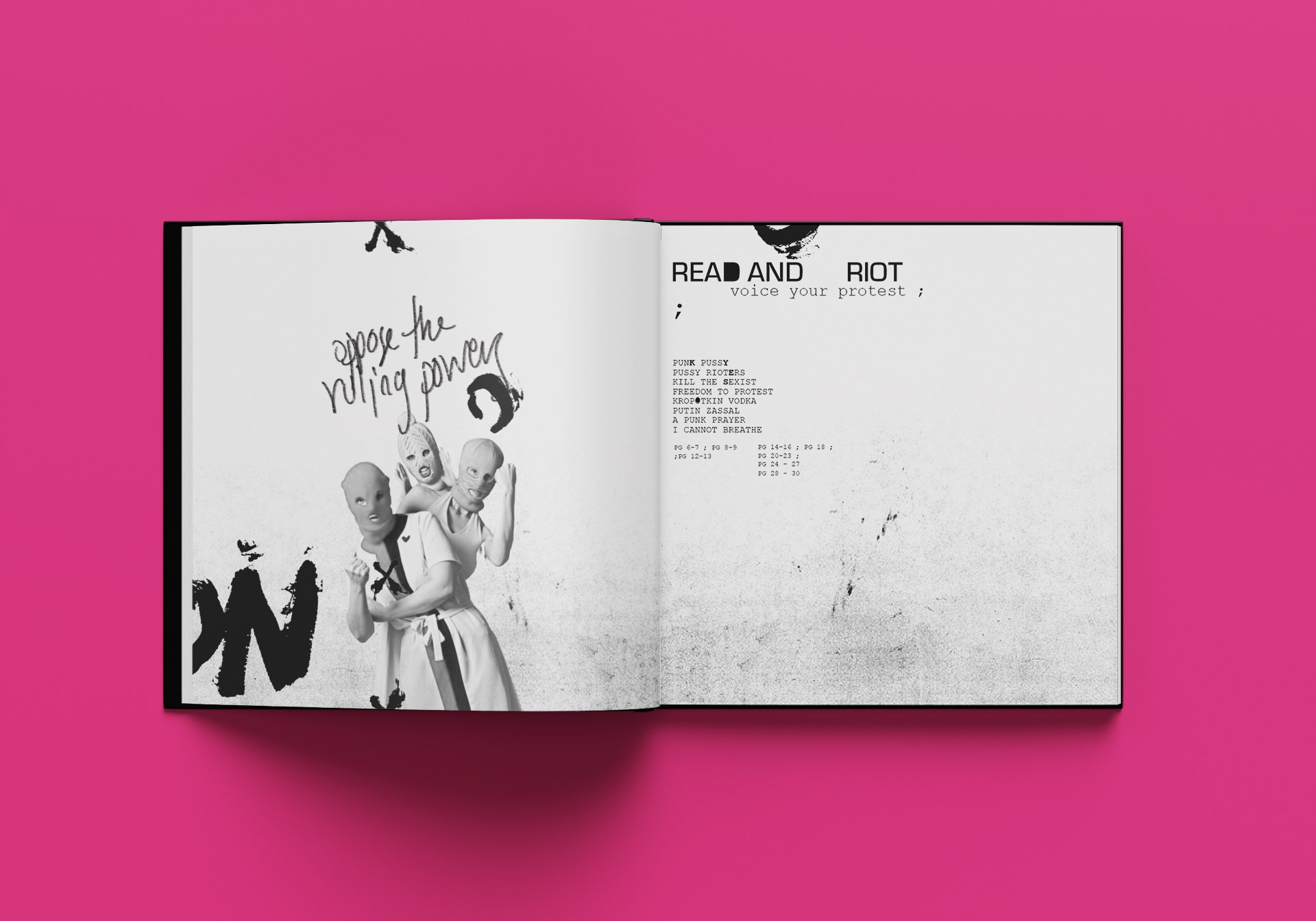
The art direction was heavily influenced by Punk Rock DIY graphic movements from the 1970s to the present. Suggestions of this can be found in design elements throughout the publication.
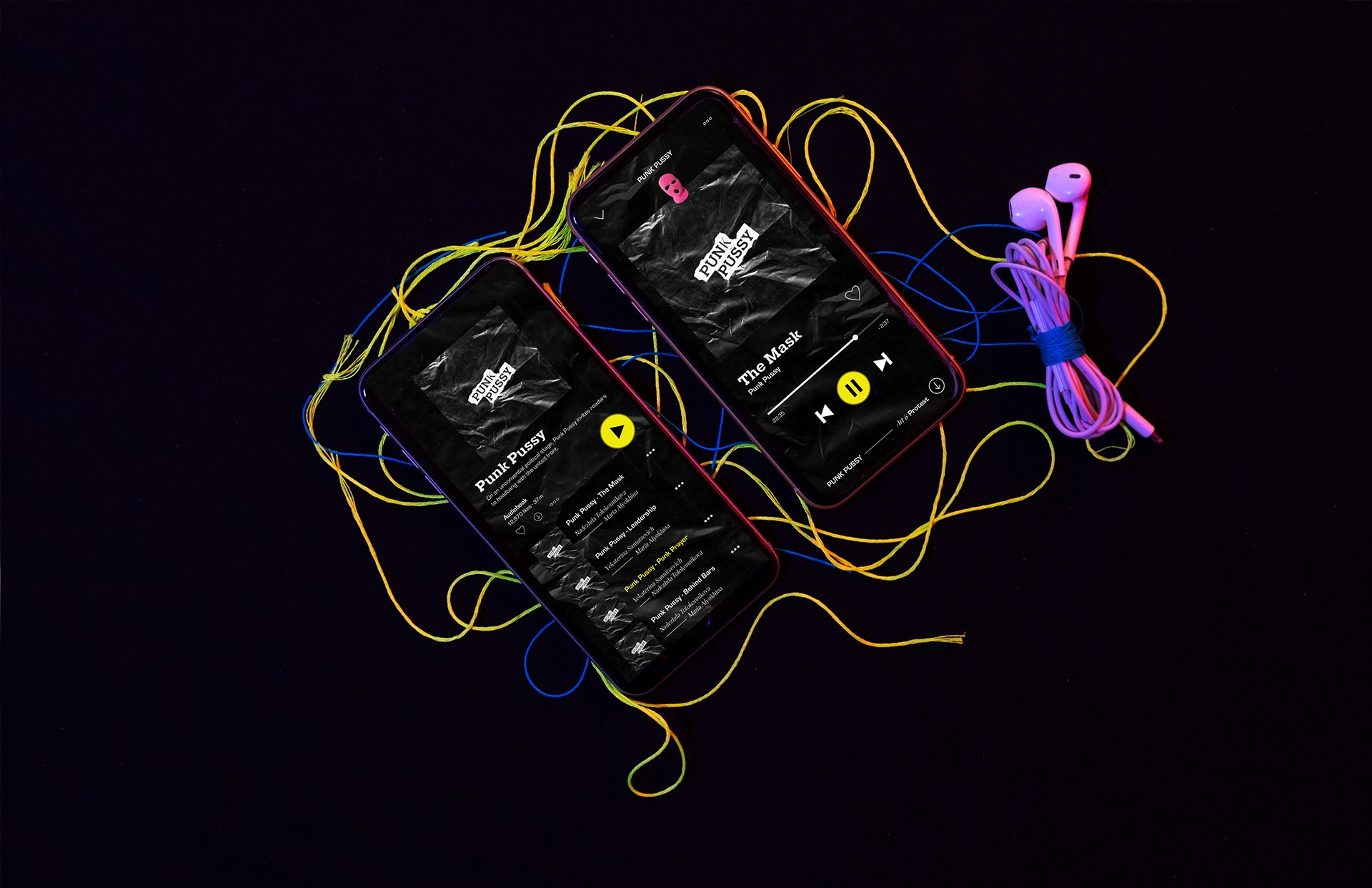
Graphically, the voice and concept of Punk Rock DIY is illustrated through fragmented crops, blurred photos, and collage. I developed a reflective type system, utilizing hand-drawn typography as a visual element with each form mimicking characters sourced from Pussy Riot’s original protest posters. Additional design elements, such as the color palette, were inspired by the electric balaclavas worn by the band members. The publication seeks to voice the chaos of performance while refining a space for progressive dialogue.

